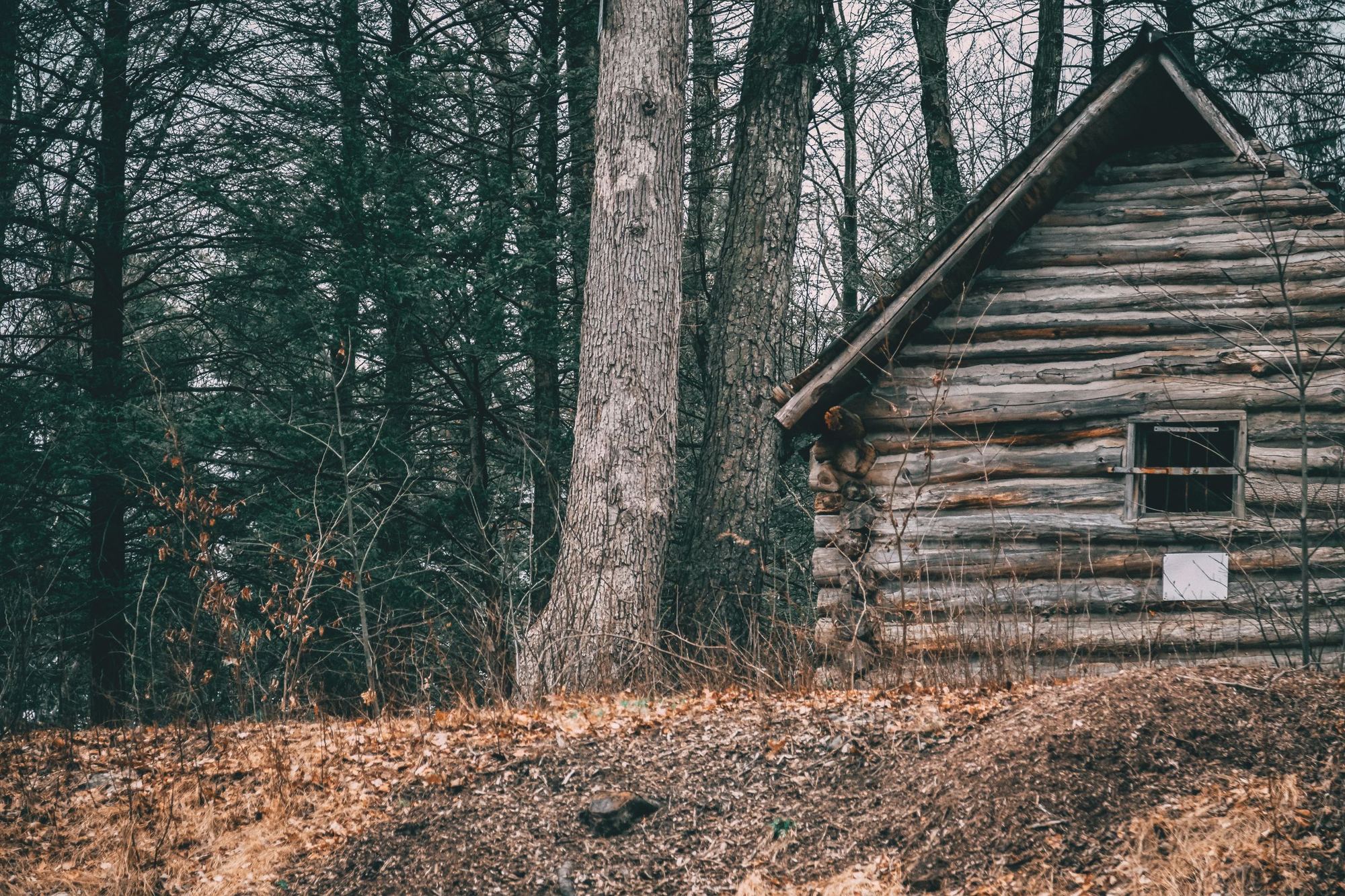

My business is based in Medford Lakes, a borough that started as a lake colony in the late 1920s and is known for its log cabins. Many of them are still here, updated and added onto over the decades. Buyers love them, and they should. But a log cabin asks different questions than a framed house, and the inspection needs to ask them too.
Water is the enemy
In a framed house the siding keeps water off the structure. In a log home the logs are the structure, and they are also the exterior wall. A log that stays wet eventually rots, and replacing a structural log is a much bigger job than replacing a piece of siding.
So most of what I look at on a log home comes back to water:
- The lower courses. The logs closest to the ground take the most splash-back from rain. I check them for soft wood and decay.
- Log ends. The ends of logs at the corners and under roof overhangs soak up water like a straw. They are one of the first places trouble shows up.
- Upward-facing checks. Logs crack (check) as they dry. That is normal, but a check that faces up can hold water and needs sealing.
- Overhangs, gutters and grading. Generous roof overhangs, working gutters and ground that slopes away from the walls all keep the logs dry.
Joints, chinking and caulk
The gaps between logs are sealed with chinking or caulk. Over time it cracks, pulls away or goes missing, and that lets in air, water and insects. I look at the condition of those joints on every wall, especially the sides that face the weather.
Settling
Logs shrink as they dry, and a log wall can settle over the years. Well-built log homes allow for this with gaps above windows and doors and adjustable posts. When that allowance was not built in, you can see sticking doors, cracked trim or gaps opening up. Older cabins with later additions deserve a close look at where the old and new parts meet.
Insects
Solid wood walls are attractive to carpenter bees, carpenter ants and wood-boring beetles. On a log home I strongly recommend adding a WDI (termite) inspection. I am licensed to do it in the same visit.
The upkeep you are signing up for
The finish on a log home is not just for looks. It protects the wood, and it has to be renewed periodically, more often on the walls that get the most sun and rain. Before you buy, ask the sellers when the logs were last cleaned and refinished, and whether any logs have been repaired or replaced.
When I inspect a cabin, I will walk you through what needs attention now and what regular maintenance will look like, so you know what you are getting into. I am an InterNACHI Certified Log Home Inspector. Call or text me at 609-744-5681.